Scrub Smarter, Not Harder: How To Wash Dishes Like a Professional
Cleaning dishes seems like such a simple task — until you have to tackle a mountain of them. Do you wash the greasy pots and pans first or start with the streaked glasses?
Whether you are cleaning up after a big family meal or managing a client’s kitchen, washing dishes the right way can make all the difference.
Fortunately, washing dishes like a professional cleaner can be easy once you know the right order and methods.
In this guide, we will walk you through how to properly wash dishes like a pro. From prepping to washing and drying, we will give you tips to help make every dish sparkle.
What Is the Correct Way To Wash Dishes?
Have you ever wondered how to wash dishes? Whether you choose to wash dishes by utilizing a dishwasher or by hand, certain steps should be followed to ensure your dishes get thoroughly clean.
When washing by hand, the basic steps you should follow include:
Prepare the dishes.
Prepare the water in the sink.
Wash the dishes.
Dry well.
When using a dishwasher, you should:
Prepare the dishes.
Load the dishes properly.
Add detergent.
Select the appropriate wash cycle.
For more information on each step, read below.
Tidy Up Portland! can help you keep your home spotless. Whether you need deep cleaning, maintenance cleaning, or something different, we can customize our cleaning packages to suit your needs. Let us help you get your time back.

How To Wash Dishes By Hand: 5 Steps To Clean Dishware
Don’t let washing dishes by hand cause you anxiety. By equipping yourself with the right supplies and the proper steps, you can tackle dishes with confidence.
It is important to have the appropriate supplies. These include:
Liquid dish detergent
Hot water
A large sink or dishpan
Dishcloths, steel wool, and scrubbers for washing
A rubber spatula or scraper

#1: Scrape Away Leftover Food
Preparing the dishes for washing makes the process easier. To prep the dishes, scrape off excess food using a rubber spatula or a paper towel if needed.
For dishes with stubborn food, soak them for 15-20 minutes to give the food time to loosen. Mixing water with baking soda or a small amount of detergent helps with this.
If your pans have leftover grease in them, dispose of the grease in the garbage. Pouring grease down the drain can wreak havoc on your pipes and cause unnecessary clogs.
#2: Fill the Sink and Soak
Fill your sink or dishpan with hot water, adding the appropriate amount of liquid detergent according to the instructions on the bottle.
As you begin washing the dishes, leave the remaining dishes in the hot, soapy water to soak.
If you have many dishes to wash, it may be necessary to drain the water and start again. If the water becomes cool, the suds disappear, or the water looks dirty and greasy, it’s time to start fresh.
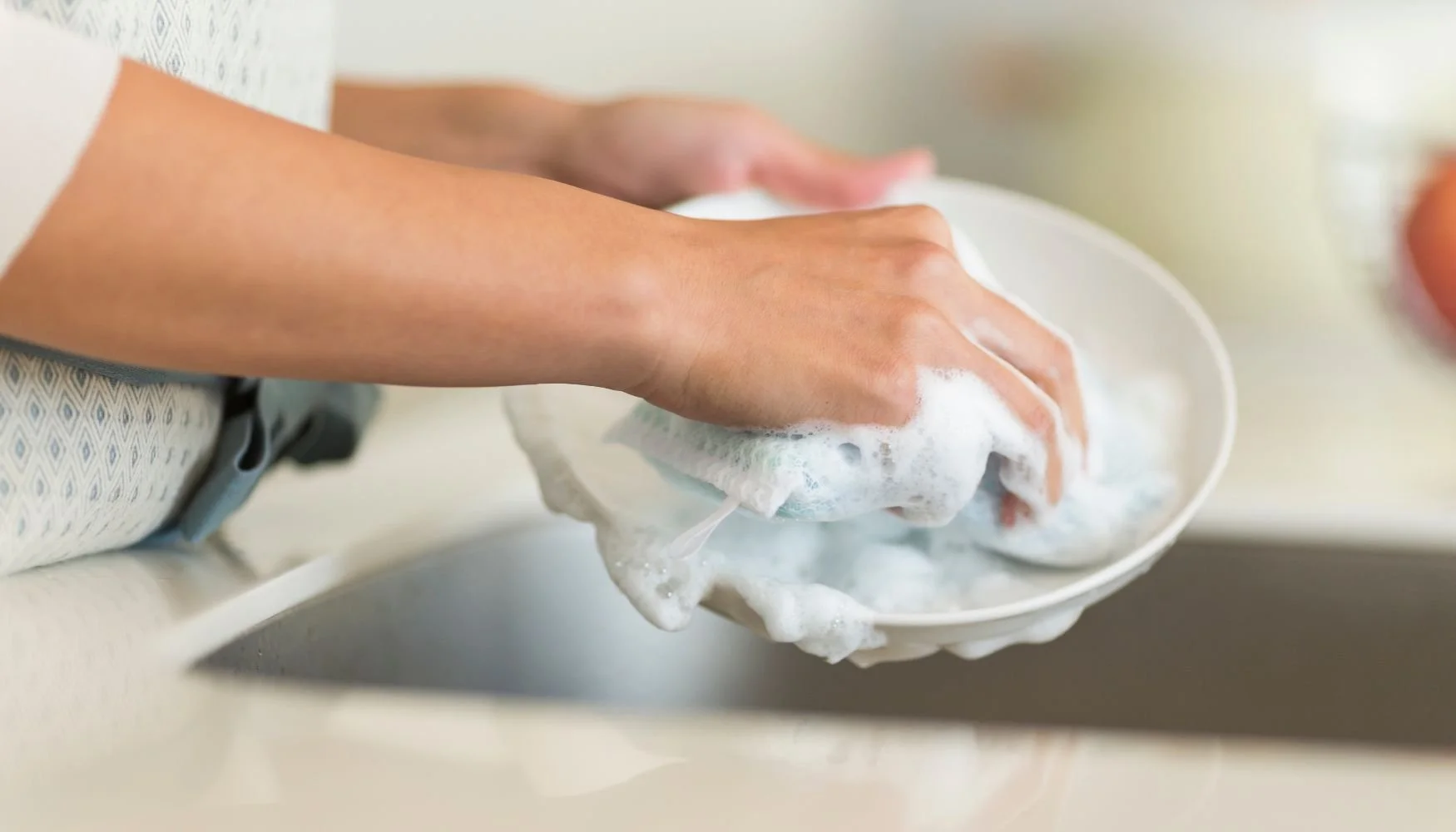
#3: Wash Under the Water
Determining which dishes to start washing first makes the process go smoother. Start with the lightest soiled dishes and move to progressively more soiled ones. By following this order, it will be less likely that you have to refresh your water multiple times.
Typically, glasses and cups are the least soiled and can be washed first. Next, you can wash plates, bowls, and other dishes that were used for eating and serving. Finally, wash the pots and pans used to cook the food, as they typically need more soak time and are dirtier than others.
Don’t forget to wash the bottoms and backs of your dishes, pots, and pans, as food can accumulate there and spill over the sides when they are stacked in the sink or on the countertop.
When handling knives or other objects that could cause injury, do not submerge them in the dishwater. Wash them one at a time to prevent cuts.
#4: Rinse With Hot Water
If you have a double sink, utilize the other side to rinse the dishes with hot water. If you do not, you can use a dishpan to rinse the dishes by dipping them in fresh, soap-free, hot water.
Rinsing the insides and outsides of the dishes under hot water removes the soap residue from the dishes and allows you to determine if any spots were missed.
#5: Allow Dishes To Dry Thoroughly
There are two methods for drying your hand-washed dishes.
Air drying is less time-consuming and requires less work. To air dry, place your dishes in a drying rack until they dry completely.
If you do not have the counter space for a drying rack, towel drying is beneficial, especially for glass dishes that may spot. You can also put the dishes away faster.
When towel drying, replace the towel with a fresh one when the towel becomes damp. Giving the dishes a few minutes to dry on a drying rack before towel drying will prevent multiple sopping wet towels to manage.
Tips and Tricks for Washing Dishes in the Dishwasher
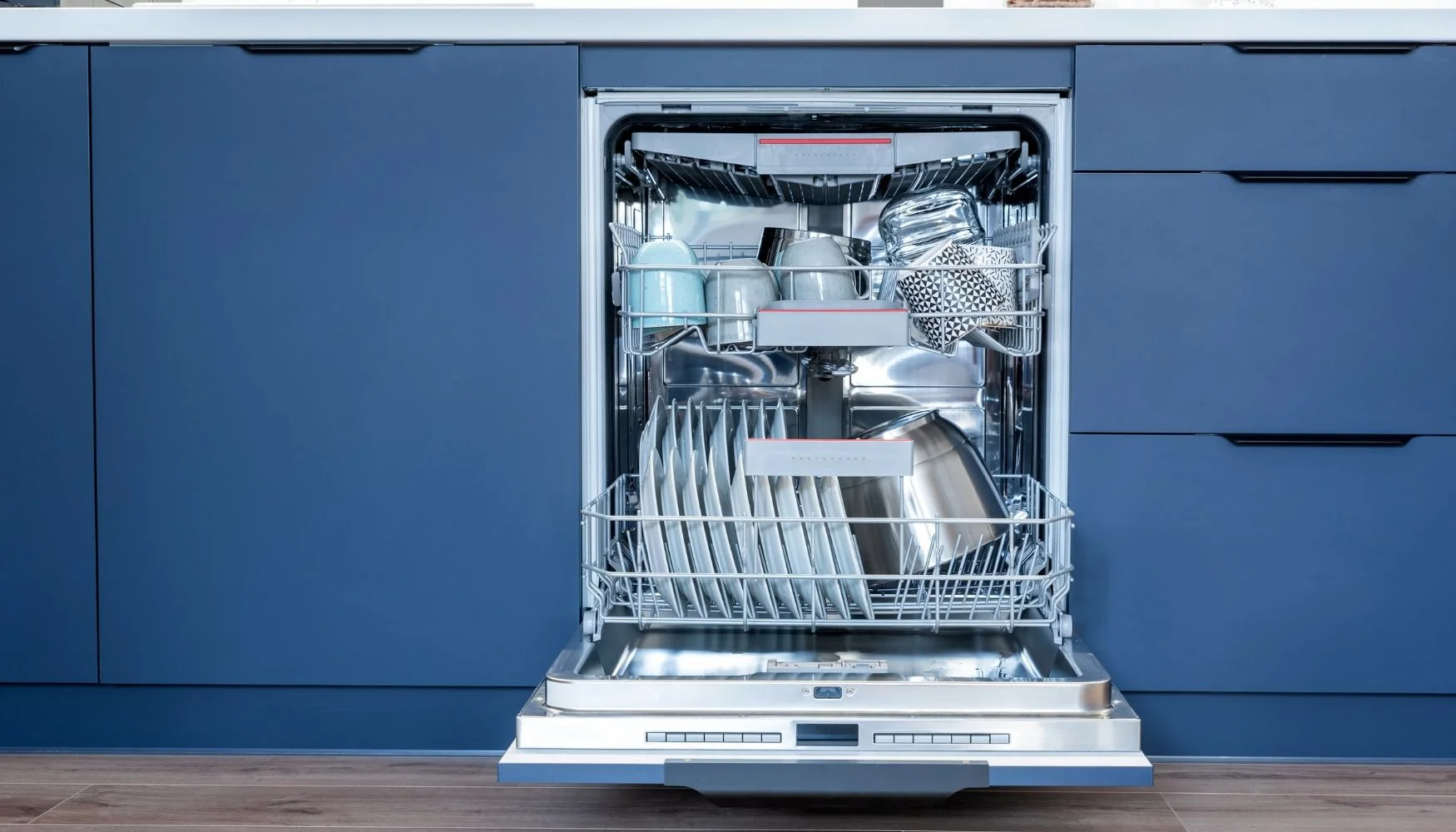
Washing dishes in the dishwasher definitely saves time, but it isn’t as simple as throwing the dishes in and pushing a button.
To ensure that your dishes come out of the dishwasher clean, follow these steps:
Prepare the dishes: Scrape off large particles of food into the trash. Some dishes could also benefit from a rinse before loading.
Load the bottom rack: Begin by loading the bottom of the dishwasher with larger items. Load the dishes so that they are facing the center and angled downward. The spray can hit the dishes properly, and the water can drain.
Load the top rack: The top rack should be reserved for glasses and heat-sensitive dishes. Silverware should be loaded with the handle down, except knives, to ensure they get clean.
Add detergent: Place the detergent pod or the appropriate amount of detergent according to instructions in the detergent dispenser on the door.
Select the cycle: Pick the cycle that matches the soil level and the delicacy of your dishes. For heavily soiled items, a heavy cycle would be appropriate. For delicate dishes or lightly soiled items, a quick cycle would be sufficient.
Other dishwasher tips include:
Avoid overcrowding: If items are stacked or overcrowded, the jets of water can’t reach all of the dirty dishes.
Use high-quality detergent: Utilizing a high-quality detergent will get your dishes cleaner and prevent you from running dishes through multiple wash cycles.
Add a rinse aid: To prevent spots and streaks on your glasses, use a rinse aid. Rinse aids can also create a faster, more efficient drying time.
Clean your filter regularly: A clogged filter prevents your dishes from being washed properly. Food particles can be deposited back on your dishes, unpleasant odors form, and the pump and drainage system can be damaged.
Check the spray arms and detergent door: Ensure that the spray arms can move freely and that the detergent door can open to release the detergent before you start the cycle.
Additional Dish Cleaning Tips
Other tips for sparkling clean dishes include:
Wash the bottom of pans: Cleaning the bottoms can get rid of the oily residue that builds up, which can burn into the pan the next time you cook with it.
Replace your dish water: If the water you are using becomes greasy or if the suds have disappeared, start with a fresh batch of hot, soapy water.
Limit soaking: If you soak dishes for too long, the hot water will cool, allowing bacteria to grow and spread.
Use paper towels: Drying pots and pans with paper towels can help remove any leftover greasy residue, preparing your pots and pans for their next use.
Put dishes away promptly: If you leave dishes out to dry for too long, they can gather dust or become dirty again. Put them away as soon as they are dry.
Replace cleaning supplies: Cleaning supplies need to be replaced or washed frequently. Sponges should be left to air dry and should be replaced regularly. Dish clothes and towels should be washed often.
Tidy Up Portland! Offers Professional and Quality Cleaning Packages for Your Home
As Portland’s most trusted cleaning service, let Tidy Up Portland! help you keep your home clean and maintained. Our staff is fully insured and background checked through a rigorous recruitment process so that our clients can trust and depend on us.
We have a variety of packages, including special packages, maintenance cleaning packages, tidy up packages, and deep cleaning packages. All of our packages include eco-friendly products that are safe for your home and our planet.
Our house cleaning services are tailored to meet the needs of you and your home. Contact us today to book an appointment!
