From Mess to Motivation: How To Make Cleaning Fun for Kids
Cleaning doesn’t have to be a chore, especially for kids.
With the right approach, tidying up can become an engaging, confidence-building part of their routine rather than a daily struggle.
By turning cleaning into a fun, hands-on activity, parents can teach valuable life skills while reducing resistance and creating a more positive atmosphere at home.
In this post, we’ll explore practical strategies, child-friendly tools, and research-backed benefits that make cleaning both enjoyable and meaningful for children.
Turning Chores Into Playtime: Why It’s Important To Get Kids Involved Early
Teaching children to clean and getting them involved early offers a wide range of benefits, including learning:
Responsibility
Independence
Teamwork
Life skills
A 2020 study of 207 children ages 5–13 found that more involvement in both self-care chores, like preparing their own snacks, and family-care chores, such as preparing something for others, was associated with better executive functions, like:
Planning
Self-regulation
Switching between tasks
Remembering instructions
These executive functions are naturally practiced through chores and, when strengthened, contribute to better academic performance and problem-solving skills. Because these abilities continue developing through adolescence, regular chores can improve ongoing brain function.
Chores also support problem-solving skills. A study of preschoolers showed a positive link between participating in household chores and stronger problem-solving abilities. Researchers also noted the importance of parental scaffolding, in which parents initially offer more guidance, then gradually step back as the child gains independence. This process shows that chores help children learn through trial, error, and persistence.
Another major benefit is the development of self-competence and self-efficacy. Data from a longitudinal study of more than 9,900 children revealed those who frequently did chores in kindergarten later reported higher academic competence, better peer relationships, and greater life satisfaction by third grade. In other words, children who helped more when they were young tended to feel more confident and capable a few years later.
The Center for Parenting Education also found that as children learn to complete tasks that may not be immediately rewarding, chores also foster responsibility, delayed gratification, and frustration tolerance.
Further research also shows that routines and chores reduce household chaos, which can negatively impact children’s executive functioning. Consistently helping at home can:
Support emotional stability
Boost self-esteem
Give children a sense of contribution and belonging
According to occupational therapists, chores prepare children for adulthood by teaching essential life skills such as:
Planning
Organization
Time management
Self-care
Community living
While hiring a professional cleaner has many benefits, teaching your children to clean at an early age can provide skills that form the foundation of lifelong independence.
How To Turn Cleaning Into a Game for Kids – Fun Cleaning Challenges for Every Age
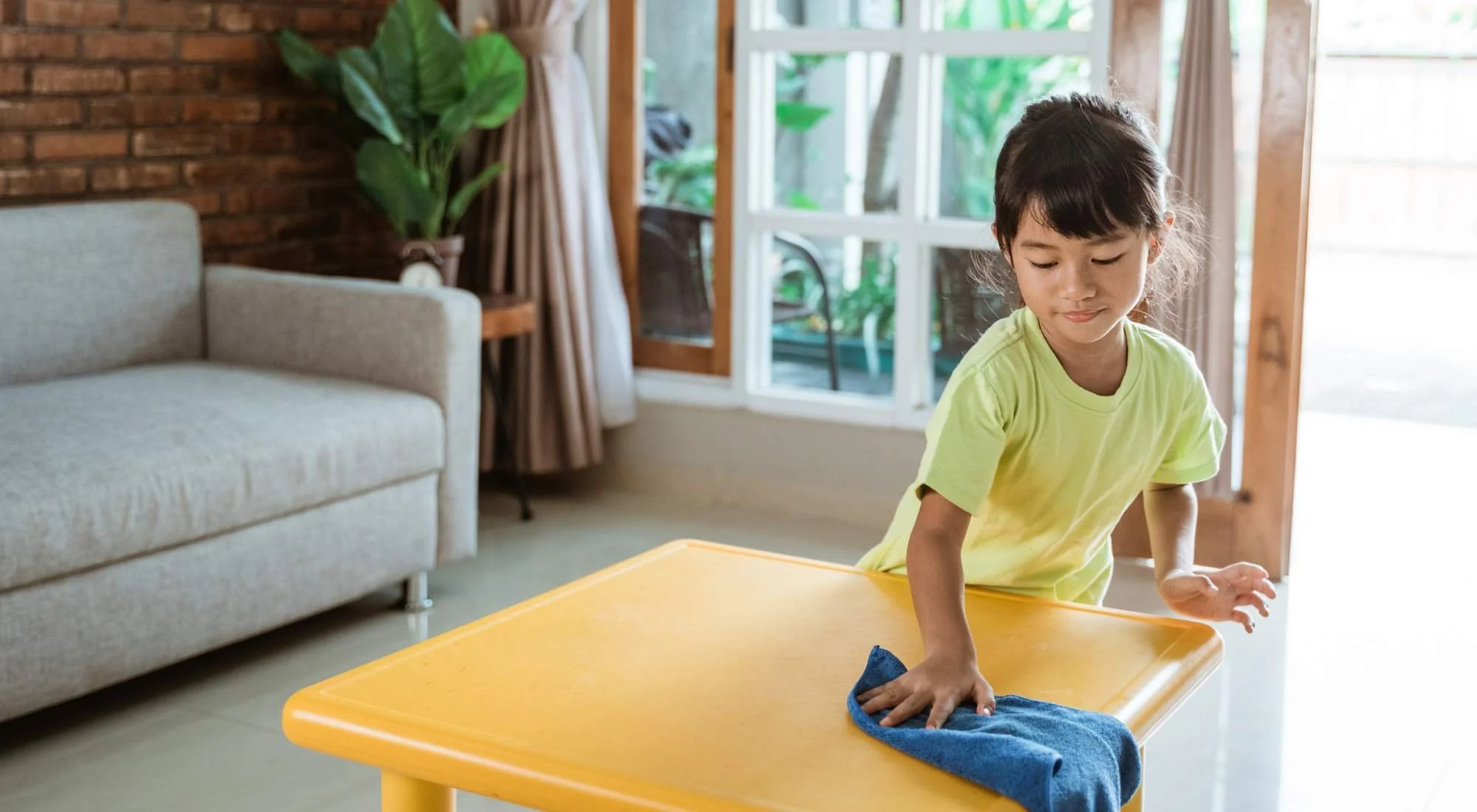
Each age group of children will have its own set of motivations for cleaning. To make sure chores are age-appropriate, match tasks to each child’s abilities. The key is to find the interests for your kid’s age group, then tap into what really makes them go.
Toddlers, aged one to three, can do simple jobs like picking up toys, dusting low surfaces, or helping sort laundry.
School-aged children from about six years old to 10 can handle slightly more complex tasks, such as making their bed, cleaning their room, or setting the table.
Teenagers from 11 to 17 years old are ready for responsibilities like washing dishes, mopping, or vacuuming.
For most kids, simple and easy to stick to is best.
Remember, every child is unique, so start with easy tasks and gradually increase difficulty as their skills grow. Here are a few task-to-game ideas that are sure to get your kid to join in on the fun.
For Toddlers: Sorting and “Treasure Hunts”
If you’re looking for ideas on how to make cleaning your room fun for kids, this idea can quickly turn into an educational game of sorting.
Suggest cleaning up toys based on matching and sorting by color, shape, or type. Or activate your younger child’s imagination by creating a treasure hunt. Pretend you’re pirates looking for the best treasure toys hidden on an island of unsorted toys. With bins labeled clearly with pictures or by color, simple, safe tasks become a rewarding game. Ahoy!
For School-Age Kids: The Timer Challenge
When kids hit school age, it’s all about competition.
Who’s stronger? Who’s faster?
Tap into their natural competitive edge by creating a tidy-up timer challenge. Set your timer and race against the clock. See how fast your kid can speed around the room picking up out-of-place items and returning them to where they belong.
The competition gets even stronger when you add in siblings or music.
For Teens: The Playlist Power Clean
Can’t peel your teen away from their phone? Empower them by passing the aux and letting them choose the playlist.
Everyone gets a little boost of energy when their favorite song comes on. Show your older kids how to personalize cleaning with a playlist of their favorite music. Dance it out to their top tunes while doing just about any cleaning task. Bonus points for using the broom or mop as a standing microphone!
You can bump it up a notch by creating “before and after” TikTok videos for added social media fun.
Motivation Matters – How To Get Kids Excited About Cleaning
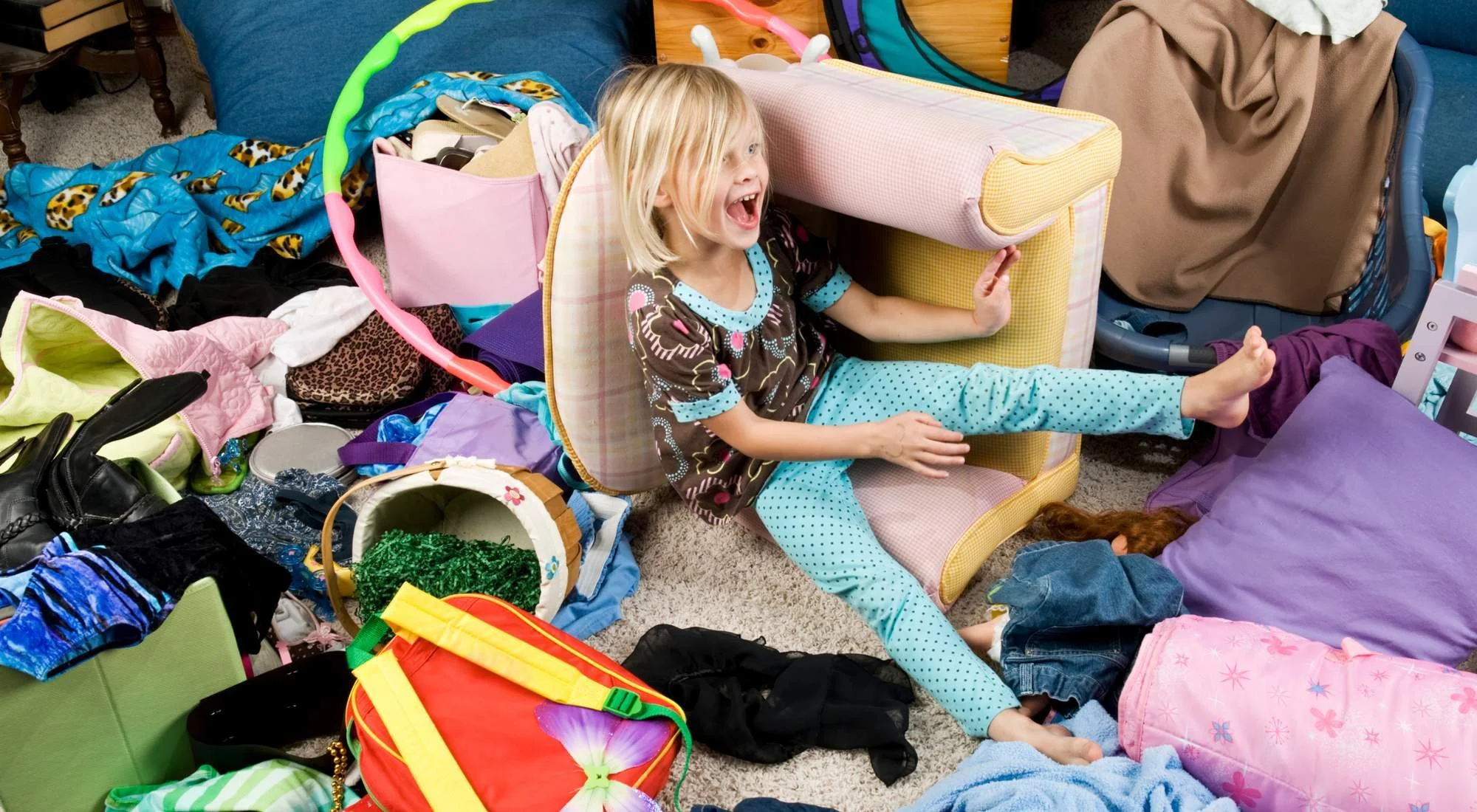
It’s important to find what motivates your child.
A points system may work for your child if they like to see a visual tabulation of the hard work they’ve done throughout the week, with a clear goal to reach.
Weekly cleaning zones or family cleaning times might work better for your child if they thrive on teamwork and being a functional member of the family. Everyone works together at the same time towards one common goal.
Do you have a stubborn teenager who requires external motivation? Offer extra family privileges, like one extra hour of TV time.
Regardless of your child’s age, it’s essential to acknowledge and praise their efforts when involving them in cleaning tasks. Showing appreciation for their hard work can greatly increase their motivation and willingness to participate in household chores.
Recognizing and appreciating their efforts reinforces cooperation and conveys that their contributions matter. Offering positive feedback builds self-esteem and encourages a growing sense of responsibility and accomplishment, instilling lifelong skills of teamwork and cleanliness while fostering a positive and supportive family dynamic.
Feeling a little overwhelmed with household cleaning chores to involve the kids? Sometimes there’s just too much to do, and you want to get it done quickly. That’s when it’s time to call in cleaning pros at Tidy Up Portland! Let us take care of the maintenance cleaning so you and the kids can focus on the day-to-day tidying tasks.

Build Routines That Stick
Make Cleaning Predictable, Not Punitive
Make cleaning a predictable part of the day. Encourage tasks that happen at predictable times, like making your bed when you wake up or cleaning up toys before dinner.
Set a specific schedule so chores become part of the daily routine, not sudden punitive demands.
Keep It Collaborative
Keep it collaborative by emphasizing family teamwork. Being a part of the family is like being a part of a community. We all have to do our share to keep our home clean and tidy.
Instead of assigning blame or burden, set a good example by letting them see you complete cleaning tasks too.
Create a Kid-Friendly Cleaning Kit
Having their own supplies gives kids ownership and excitement about cleaning. Create a kid-friendly cleaning kit with child-safe cleaning tools like:
A small, lightweight broom and dustpan sized for little hands
A handheld brush or mini scrub brush with soft bristles
Chemical-free, microfiber cleaning cloths are safe for wiping surfaces
Spray bottles filled with water or non-toxic, kid-friendly cleaning sprays like water and vinegar solutions or store-bought plant-based cleaners (requires supervision)
A child-sized mop or mop mitt that’s lightweight and easy to push
Foam sponges or soft scrub sponges that are gentle on surfaces and safe for children to grip
A small laundry basket or sorter to help with sorting clothes safely
A dusting mitt or dusting wand with a soft, bendable tool for dusting surfaces
Non-toxic, toy-safe disinfecting wipes for cleaning plastic toys (requires supervision)
A step stool with non-slip feet to reach counters safely while cleaning
A lightweight and durable plastic bucket with a handle for carrying clothes or toys (avoid filling with water for very young children)
When Kids Need Extra Encouragement
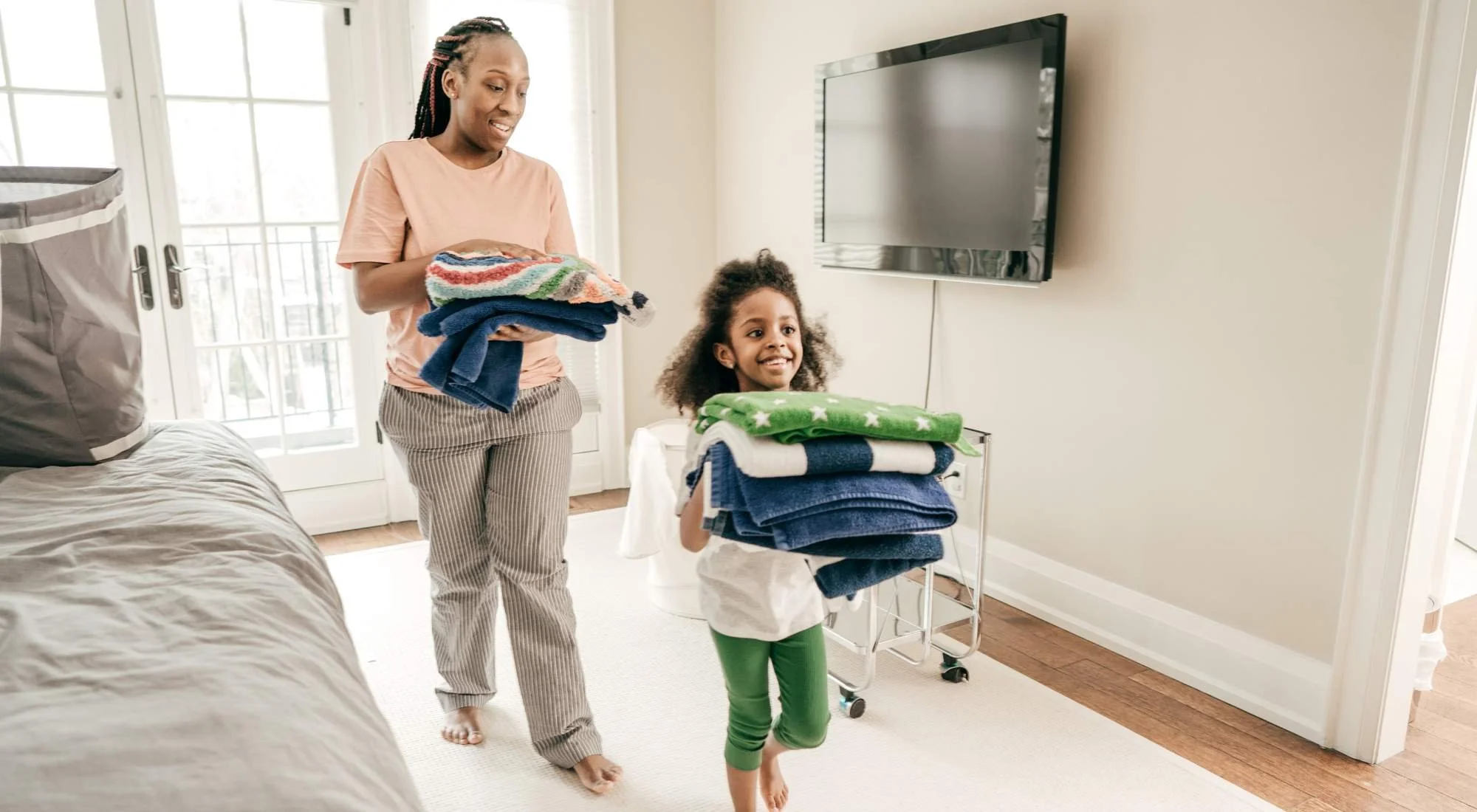
Sometimes our kids might need a little extra encouragement to help adopt the chores into daily life. This can be a good time to evaluate the tasks at hand to be sure they are developmentally appropriate.
Be sure you have provided clear, engaging instructions and explained the purpose and importance of each task. Children who understand the purpose behind the tasks are more likely to feel motivated and responsible for their cleaning duties.
Try breaking the task down into smaller, manageable steps to allow them to focus on one task at a time and prevent them from feeling overwhelmed.
Use words of affirmation instead of material rewards. Rewarding with things can backfire in the long run, but showing appreciation can instill a sense of accomplishment and have a lasting effect once that material reward is long gone.
